
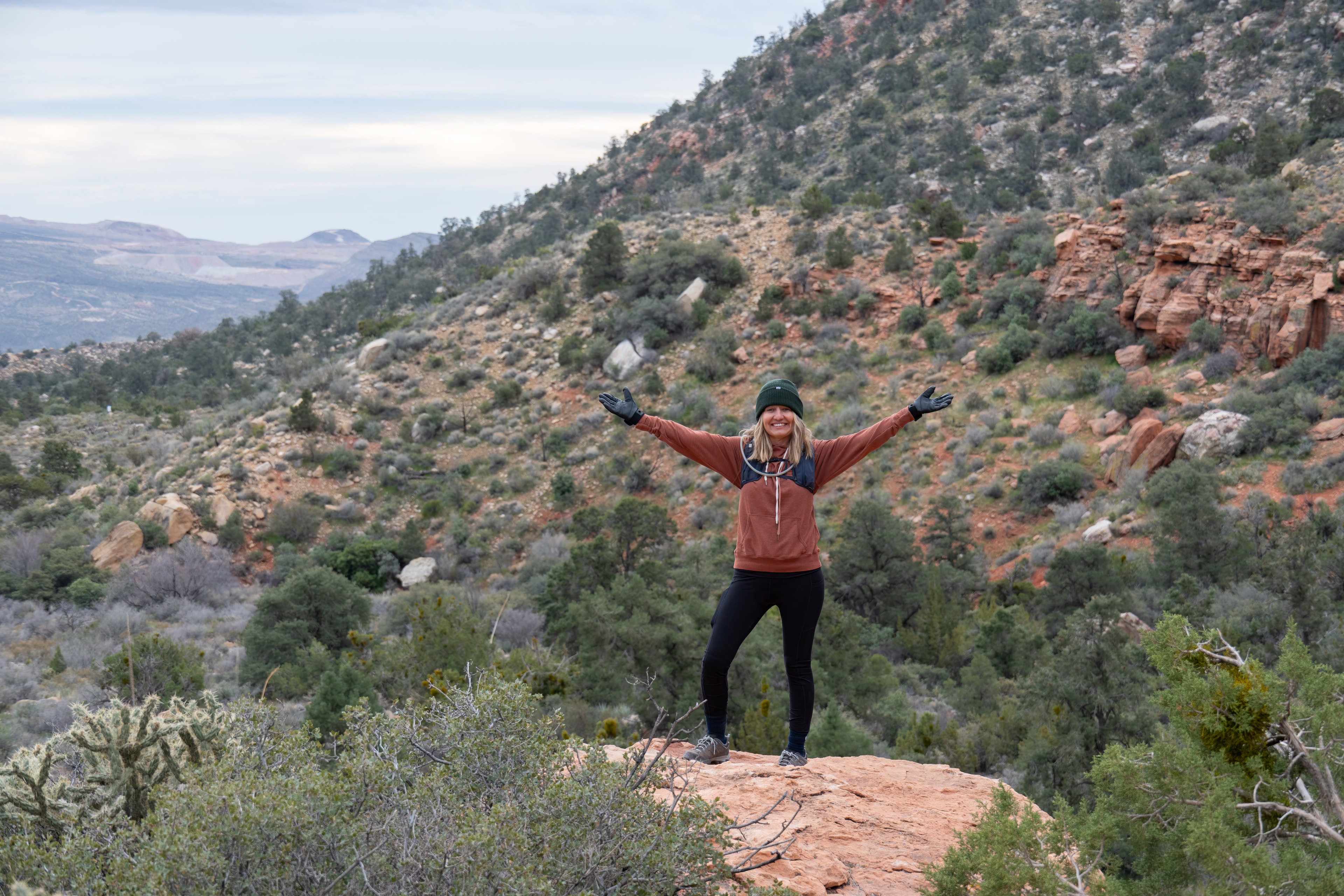
I Almost Talked Myself Out of It
There are plenty of reasons to talk yourself out of your first hike. What if you get lost? What if you don't have the right gear? What if the trail is harder than you expected? The truth is, you don't need to know everything before you begin. You need a trail that matches your ability, a little preparation, and the willingness to take that first step. This guide will help you with the rest.
Gear Guide
What You Actually Need
You don't need to spend a fortune. Here's what actually matters for your first hike.
Footwear
For easy trails, a sturdy pair of athletic shoes or trail runners works fine. You don't need full hiking boots for your first outing. What you do need: closed-toe shoes with decent grip that you've worn before.
Water
Bring more than you think you need. A general rule: half a liter per hour of hiking in mild weather, more in heat. A reusable water bottle works fine for short hikes. For anything over two hours, consider a hydration pack.
Layers
Weather changes fast on trails, especially at elevation. Even on a warm day, bring a lightweight jacket or packable layer. You'll thank yourself on the descent when the wind picks up or clouds roll in.
A Small Daypack
You need somewhere to carry your water, snacks, layers, and phone. A 10–20 liter daypack is plenty for most beginner hikes. Look for one with padded shoulder straps and a hip belt — it makes a huge difference on longer trails.
Snacks
Trail mix, energy bars, fruit, crackers — anything easy to eat while moving. Hiking burns more calories than you expect, and bonking (running out of energy) on a trail is miserable. Eat before you're hungry.
Step by Step
How to Plan Your First Hike
Five steps from couch to trailhead.
Choose the Right Trail
Start shorter and easier than you think you need to. A 2–4 mile trail with minimal elevation gain is a perfect first hike. Apps like AllTrails let you filter by difficulty, length, and reviews. Look for trails rated 'easy' with lots of recent reviews, and read the latest comments for information about trail conditions and navigation.
Check the Conditions
Look up the weather forecast the morning of your hike. Check recent trail reviews on AllTrails for current conditions — mud, downed trees, snow patches. Know what time sunset is and plan to be back at the trailhead at least an hour before dark.
Tell Someone Where You're Going
Before you leave, tell a friend or family member which trail you're hiking, your car's location, and when you expect to be back. This is basic safety and takes thirty seconds. If you're hiking solo, this step is non-negotiable.
Start Slow and Steady
The most common beginner mistake is starting too fast. You'll feel great at the beginning and burn out halfway through. Set a pace where you can hold a conversation. Take breaks before you need them. The trail isn't going anywhere.
Turn Around When You Need To
There's no shame in turning around. If you're tired, the weather is changing, or you've hit your time limit — turn around. The summit will be there next time. Getting back safely is always the goal. The best hikers know when to call it.
On Getting Lost
It's easy to get turned around, even on a well-marked trail. Download the trail map to your phone before you go and make sure it's available online. Stay on marked rails. If you're unsure where you are, stop and check you map before continuing. And remember: it's kay to ask other hikers for help. The trail community is genuinely kind.
Location Tips
Where to Start
State parks, local nature preserves, and national parks can all be great places for a first hike. Look for a well-maintained, well-marked trail rated easy, ideally with facilities nearby. Search 'easy hiking trails near me' and start close to home.
- ✓AllTrails is free and has thousands of beginner-friendly trail reviews
- ✓State park websites list trail difficulty, length, and current conditions
- ✓Weekday mornings are quieter and cooler than weekend afternoons
- ✓Parking lots fill fast at popular trailheads — arrive early
"I made it to the top of that little hill and stood there looking out at the valley below, completely out of breath and completely alive. I thought: I could do this forever."
Ready to Keep Going?
One hike leads to another. Once you've got a few easy trails under your belt, you'll start eyeing the longer ones. The Brave Beginner Series has more guides to keep you moving forward.