
I Had No Idea What I Was Doing
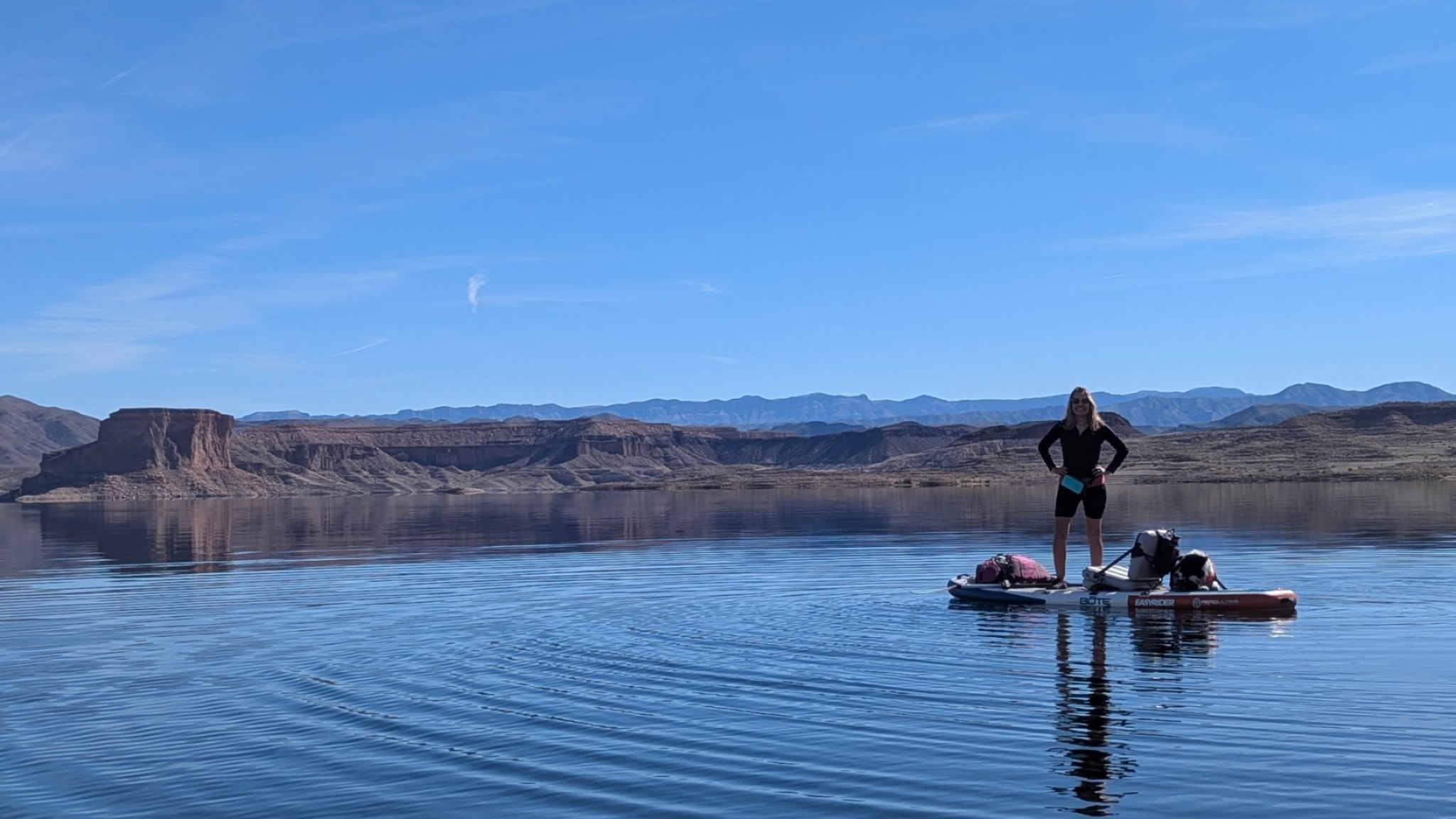
The first time I tried paddle boarding, I had no idea what I was doing. I was unsteady, unsure of myself, and pretty certain I was going to end up in the water. Somehow, I stayed on the board — barely — and absolutely loved it. What started as something new to try became one of my favorite ways to adventure. This guide is everything I wish I’d known when I started, along with what I’ve learned since.
Gear Guide
What You Actually Need
You don't need to own anything to try paddle boarding. But here's what matters when you're ready to gear up.
The Board
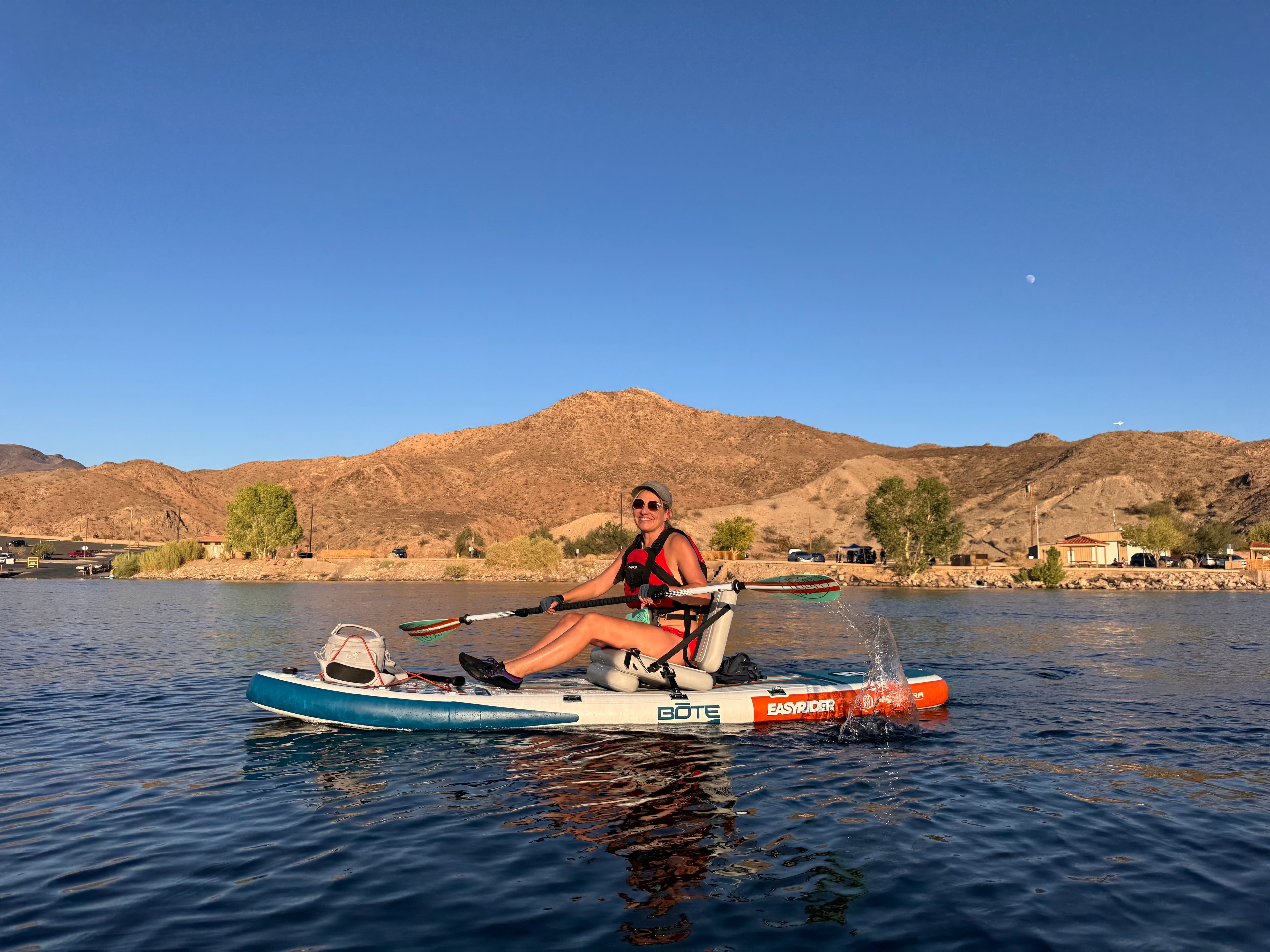
For beginners, an inflatable SUP (stand-up paddleboard) is ideal. They're stable, forgiving, and easy to transport. Look for a board that's at least 10 feet long and 32 inches wide — the wider the board, the more stable it is.
The Paddle
Your paddle should be about 6–10 inches taller than you. Most rental paddles are adjustable. The blade should angle away from you when you're paddling — this is counterintuitive at first but makes a huge difference in efficiency.
The Leash
A leash keeps you connected to your board if you fall off, but the right leash depends on where you're paddling. A coiled ankle leash is commonly used on flatwater. Moving or flowing water requires different safety considerations, including a quick-release system designed for that environment. Know your conditions before choosing a leash.
Life Jacket (PFD)
A properly fitted PFD is essential safety gear. In the U.S., paddle boards used outside designated swimming, surfing, or bathing areas are generally subject to Coast Guard PFD requirements, and state or local rules may be stricter. Check the rules where you're paddling—and especially as a beginner or when paddling alone, wearing your PFD is the safer choice.
What to Wear
Dress for the water temperature, not the air temperature. Quick-dry shorts and a rash guard are ideal in warm weather. In cooler conditions, appropriate thermal protection such as a wetsuit can help protect you from cold-water exposure.
Step by Step
How to Actually Do It
Five steps from shore to gliding on the water.
Start on Your Knees
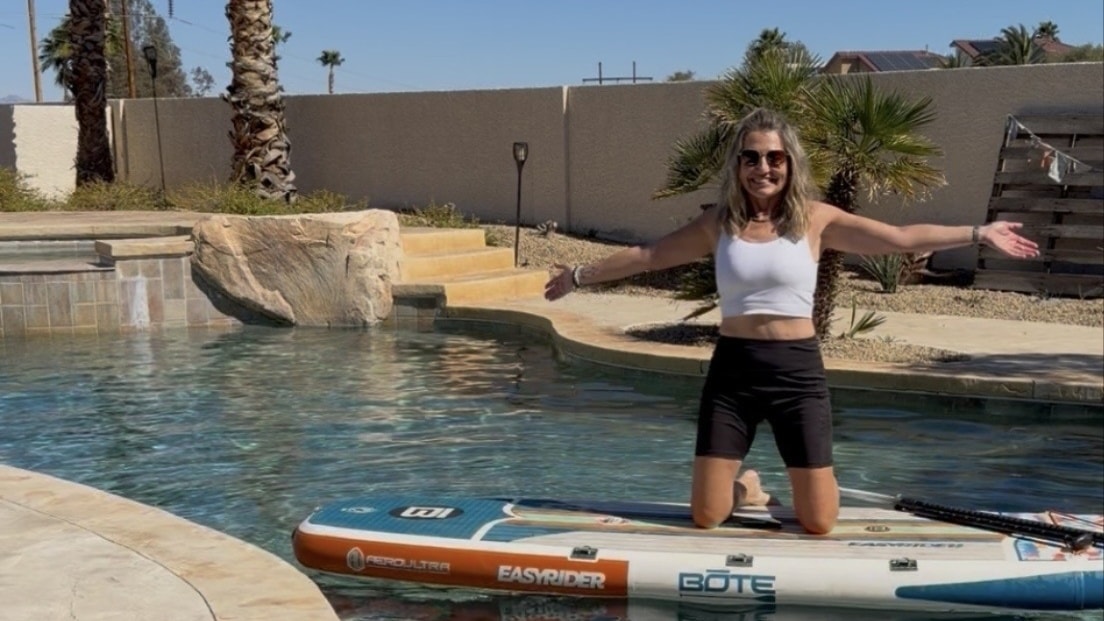
Don't try to stand up right away. Paddle out from shore on your knees first. Get a feel for how the board moves, how it responds to your weight, and how to steer. Most beginners skip this step and regret it.
Find the Center of the Board
The handle in the middle of the board marks the balance point. When you stand up, your feet should be on either side of that handle, hip-width apart, toes pointing forward. Standing too far back or forward makes everything harder.
Stand Up Slowly
From kneeling, place your hands flat on the board in front of you and push up to standing — one foot at a time. Keep your knees slightly bent. Your instinct will be to look down at your feet. Don't. Look at the horizon. It helps more than you'd think.
Paddle with Your Core, Not Your Arms
Reach the paddle forward, plant the blade fully in the water, and pull it back past your feet using your torso, not just your arms. This is the most common mistake beginners make — using only arm strength tires you out fast and gives you less power.
Fall Safely
Falling is part of learning. If you start to fall, try to fall away from the board rather than onto it. Before paddling, know the depth and be aware of rocks, branches, or other hazards beneath the water. Once you're in, stay calm, get back to your board, and climb on from the side.
On Falling In
Here's the thing nobody tells you: falling in is actually kind of fun. Once you stop dreading it, the whole experience opens up. Fall in, laugh, and get back on. The fear of falling is almost always worse than the fall itself. Let yourself be a beginner. Let yourself fall. It's part of the adventure.
Location Tips
Where to Go First
Start on calm, flat water — a lake, a calm reservoir, or a protected bay. Avoid ocean surf, moving water, or areas with heavy boat traffic until you have more experience.. Early morning is ideal: the water is usually glassy, there are fewer people, and the light is gorgeous. Many state parks and recreation areas have paddle board rentals right on the water.
- ✓Search 'paddle board rentals near me' — most lakes have them
- ✓Look for 'beginner SUP lessons' for your first time out
- ✓Avoid windy days until you have your balance
- ✓Go with a friend your first time if possible
"I stood up on that board and for one perfect moment, I was completely present. No past, no future. Just water, sun, and the ridiculous joy of being alive and upright."
Free Download
Ready for Your First Paddle?
I created the Brave Beginner Paddle Boarding Guide with everything I wish I'd known when I started — practical tips, lessons learned, safety basics, and the confidence to get on the water.
GET THE FREE PADDLE BOARDING GUIDEReady to Keep Going?
Paddle boarding opened up a whole new world for me. Once you're comfortable on flat water, you can explore coves, paddle to beaches, do sunrise sessions, even try SUP yoga. The Brave Beginner Series has more guides to keep you moving.