
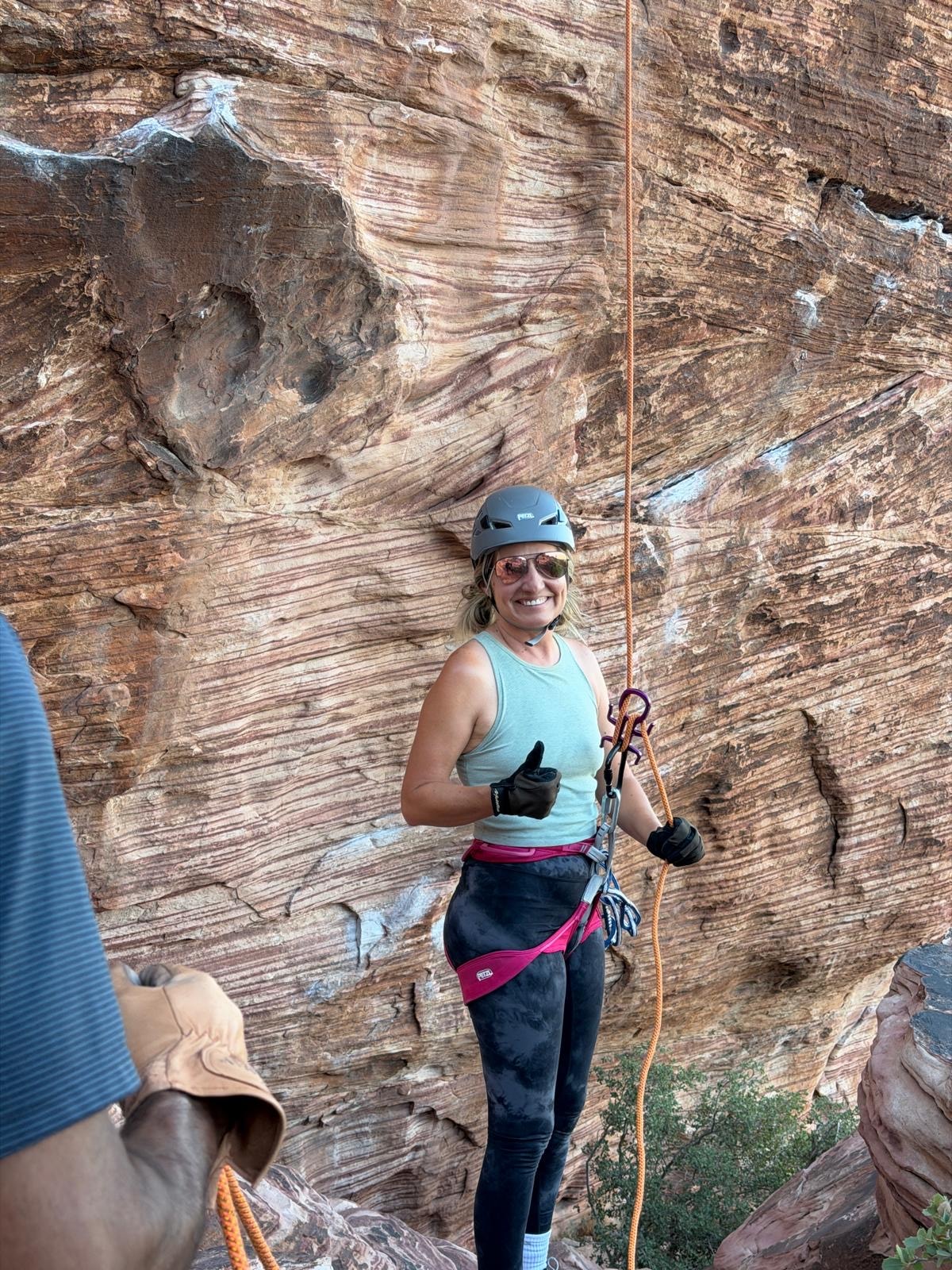
My Hands Were Actually Shaking
There's something very unnatural about standing at the top of a cliff and being told to sit in your harness and step over the edge. Even when you know the gear is designed to hold you, your brain has a few things to say about it. My hands were shaking, but I trusted the equipment, listened to the people guiding me, adn took the first step backward. Once I was on the wall, the fear started to settle and I could actually enjoy what I was doing. That first rappel taught me something I've carried into a lot of adventures since: sometimes courage is simply doing the thing while you're scared. This guide is what I wish I'd known before that first rappel.
Gear Guide
The Gear That Keeps You Safe
You won't own any of this for your first rappel — and that's exactly right. Here's what your guide will provide and what each piece does.
The Harness
A harness wraps around your waist and thighs and is an important part of your rappelling system. Your guide will fit it properly and check it before every rappel. It should feel snug and secure, but not painful. If anything feels loose, uncomfortable, or just doesn't feel right, tell your guide before you go over the edge.
The Helmet
Non-negotiable. Helmets protect against rockfall from above and from hitting the wall during descent. A properly fitted helmet sits level on your head, doesn't rock forward or back, and the chin strap is snug. Your guide will check the fit.
The Rappel Device
A rappel device creates friction on the rope to help control you descent. There are different types of devices and setups, and your guide wil choose the appropriate system, set it up, and teach you how to use it before you approach the edge.
Gloves
Rappelling gloves protect your hands from rope friction and heat. For a guided beginner rappel, lightweight leather or synthetic gloves work well. Your guide may provide them, but it's worth asking ahead of time so you can bring your own if needed.
Footwear
Sturdy closed-toe shoes with good grip are essential. Hiking boots or trail runners work perfectly. You'll be walking on rock faces, and your feet need to grip the wall as you descend. Sandals, flip flops, and smooth-soled shoes are not appropriate.
What to Expect
What to Expect on Your First Rappel
From the ground briefing to the bottom of the wall.
Book a Guided Experience
Your first rappel should be with a qualified guide or reputable guiding company. Look for experienced guides, appropriate credentials, a strong safety record, and recent reviews. A good beginner experience should include instruction, properly fitted equipment, and time to practice before approaching the edge.
Ground School First
Before you approach the edge, your guide should walk you through the equipment, body position, communication, and what you'll do during the descent. This is your chance to practice, get comfortable with the system, and ask every question you have. Pay attention here— this is where confidence starts to build. There are no stupid questions at the top of a cliff.
The Edge Is the Hardest Part
Getting over the edge can be the hardest moment of the entire rappel. Your brain may be telling you that stepping backward off a cliff is completely wrong. Your guide will talk you through it step by step. Listen to your guide, trust the equipment, and take your time. For me, once I was on the wall, the fear dropped significantly. The edge was the hardest part— everything after it was the reward.
The Descent
Once you're on the wall, your guide will continue coaching you through the descent. This is where everything you practiced on the ground starts to make sense. Take your time, listen to your guide, and focus on what you've been taught. For me, this was the moment the fear started turning into fun.
Reach the Bottom and Look Up
When your feet touch the ground, take a breath and look up at where you came from. That wall you just descended — you did that. Your guide will unclip you from the system and you'll have a moment to process what just happened. I remember reaching the bottom and already wanting to do it again. That's the rappelling effect. It gets in your blood.
On Fear and the Edge
Fear is not always a sign that you shouldn't do something. Sometimes it shows up when you're about to do something that matters to you. I was scared at the edge— and I've watched plenty of other people feel that fear too. Courage didn't mean the fear disappeared. For me, it meant listening to my guide, trusting the process, and deciding to go anyway. You don't have to be fearless to try something new.
Where to Go
Where to Find Guided Rappelling
Guided rappelling experiences are available across the country, with the highest concentration near canyon country in the Southwest, the Blue Ridge and Appalachian regions in the East, and mountain areas throughout the Rockies. Most experiences are half-day or full-day and many outfitters offer options specifically designed for beginners.
- ✓Zion National Park area (Utah) — a popular region for guided canyoneering and rappelling experiences.
- ✓Red River Gorge (Kentucky) —guided climbing and rappelling experiences are available for beginners.
- ✓New River Gorge (West Virginia) — another area with professional guides offering introductory experiences.
- ✓Search 'guided rappelling near me' and look exclusively for beginner or introductory experiences.
"I stood at the top of that cliff and thought: I am 54 years old and I am about to rappel off a cliff. And then I leaned back and did it. And the woman at the bottom was not the same woman who stood at the top."
Ready to Keep Going?
Rappelling opens a door. Once you've gone over one edge, you start looking at the world differently — wondering what else you've been standing at the top of, waiting to try. The Brave Beginner Series has more guides to keep you moving.